The beaver pond across the road is going on two years old this time. It's the second time these industrious critters have built over there - the previous time was in 2008 or so, and that one lasted about a year.
I thought the heavy rains might take it down over the last few weeks, but it survived. Dan told me there was a breach, and I could tell from the water levels that it is much lower than it has been for most of the year, although the foliage has kept it hidden until now.
They seem to have settled on having the dam height a little lower in the past, so it doesn't quite cover the whole lot over there.
Still, it's pleasant enough to look at - the water sparkles through the trees year round, and sometimes I can see the wake of one of the beavers swimming around on patrol.
"Green Acres" it ain't, but we love owning and visiting the Hawksbill Cabin, near Stanley and Luray, Virginia, and a wealth of outdoor activities, including: the "World Famous" Shenandoah River, Shenandoah National Park, Skyline Drive, Luray Caverns, and Massanutten Resort. From time to time we'll post about other stuff, too. As the number of blog posts grows, we've added a few navigation tools in the right column to facilitate getting around the site.
Ramble On
Thursday, October 22, 2015
Wednesday, October 21, 2015
Fall on the Terrace
Those ribs were great. Since we'd already enjoyed the growler, he broke into his stash of Beaver Run Brewery offerings, including an IPA made with Hawksbill Hops! The nice evening outside was a reminder that fall has arrived and it won't belong before we're putting on sweaters and raking leaves.
Summer came and went too fast this year.
Monday, October 19, 2015
The Page County Grown Century
My job this time was to staff the lunch stop at Public House Produce. Of course, that meant we shared the promotion opportunity, since Hawksbill Hop Yards is co-located there, and is also a member of Page County Grown.
Quite a few of the riders came by for bagels, fruit, nutella and peanut butter, and various other offerings, taking a break from what turned out to be beautiful weather, with the fall colors just beginning in the Valley.
There was a lot of activity around the farm. The goats were interested in the riders, but in the end, Delilah here was just not impressed.
It was a great event, ending up with a great meal catered by the Mimslyn down at the VA. That's another point of interest - I'm eligible for membership, and have been meaning to check in on that. Maybe a goal for 2016.
Along with volunteering for more active tourism events, of course!
Thursday, October 1, 2015
The C-130 and the Blue Ridge
As I'm wont to do, I was sitting out in the sunshine on the brick terrace a few weekends back. I heard a gentle rumble of an unfamiliar airplane overhead and started looking around for it.
To my surprise, there was a C-130 in an unusual paint scheme crossing the sky - flying quite low actually, since it was headed for the Blue Ridge in Shenandoah National Park. The mountains near us - including Stonyman, Hawksbill, and Big Meadow, stretch upwards to 4,000 feet, and I thought the C-130 might have to climb a bit to clear.
In the first photo, you can just see the aircraft. The line of trees below obscures the view of the park here, but that is on a line to Big Meadow, so that probably gave a thrill to some of the park visitors.
As I was looking through my photos yesterday, I thought I might zoom in on the photo of the C-130 to see if the paint job would come in any clearer. Here you can see the bright silver of the plane - really caught be by surprise, as we more often get Air Force Reserve or National Guard flights in the area, and the planes are usually green. I can't identify ths one from a web search, but I suspect it may be a Navy version.
To my surprise, there was a C-130 in an unusual paint scheme crossing the sky - flying quite low actually, since it was headed for the Blue Ridge in Shenandoah National Park. The mountains near us - including Stonyman, Hawksbill, and Big Meadow, stretch upwards to 4,000 feet, and I thought the C-130 might have to climb a bit to clear.
In the first photo, you can just see the aircraft. The line of trees below obscures the view of the park here, but that is on a line to Big Meadow, so that probably gave a thrill to some of the park visitors.
As I was looking through my photos yesterday, I thought I might zoom in on the photo of the C-130 to see if the paint job would come in any clearer. Here you can see the bright silver of the plane - really caught be by surprise, as we more often get Air Force Reserve or National Guard flights in the area, and the planes are usually green. I can't identify ths one from a web search, but I suspect it may be a Navy version.
Tuesday, September 29, 2015
Virginia's Own Hardywood Park Craft Brewery
As long as I am on the topic of Virginia-grown hops, I thought I might post about Hardywood Park brewery down in Richmond. I first noticed these beers at the Whole Foods here in Alexandria back in 2013 or so, but now I can also get them at Trader Joes (and if I looked hard enough, they're likely in some of the Giants or Safeways, and maybe even Harris Teeters).
The story of this brewery, which is located in the historic German brewing district in Richmond, makes for a good tale, and it can be found on their web page. I've tried several varieties, and I keep buying it not only because I like the beer, but because really like the 25 oz. bottle size that I can recycle for my home brews.
This weekend I picked up the RVA IPA - which is an annual release of theirs. Here's where the connection to Virginia-grown hops comes in: they use volunteer-grown hops from the Richmond area. Here's the description from their site:
"...we reached out to Richmond's very passionate beer community to invite home hop growers to donate some of their fresh harvest. Sure enough, they came through. With fresh hop contributions from local home growers, Hardywood RVA IPA captures the terroir of Richmond and the spirit of its hop growing beer enthusiasts. A wet-hopped, American-style India Pale Ale with loads of fresh local Columbus, Cascade, Chinook, Centennial and Glacier hops, Hardywood RVA IPA displays a toasted auburn color with a vibrant, creamy head."
So even though I didn't contribute hops to this effort - after all, Hawksbill Hop Yards is intended to be a commercial farm, I did picked up a bottle to enjoy on Saturday night. And of course, adding to my personal enjoyment was the fact that I poured it into one of the logo glasses from the farm.
Cheers Hardywood, maybe sometime in the future we can collaborate with Hawksbill Hops.
The story of this brewery, which is located in the historic German brewing district in Richmond, makes for a good tale, and it can be found on their web page. I've tried several varieties, and I keep buying it not only because I like the beer, but because really like the 25 oz. bottle size that I can recycle for my home brews.
This weekend I picked up the RVA IPA - which is an annual release of theirs. Here's where the connection to Virginia-grown hops comes in: they use volunteer-grown hops from the Richmond area. Here's the description from their site:
"...we reached out to Richmond's very passionate beer community to invite home hop growers to donate some of their fresh harvest. Sure enough, they came through. With fresh hop contributions from local home growers, Hardywood RVA IPA captures the terroir of Richmond and the spirit of its hop growing beer enthusiasts. A wet-hopped, American-style India Pale Ale with loads of fresh local Columbus, Cascade, Chinook, Centennial and Glacier hops, Hardywood RVA IPA displays a toasted auburn color with a vibrant, creamy head."
So even though I didn't contribute hops to this effort - after all, Hawksbill Hop Yards is intended to be a commercial farm, I did picked up a bottle to enjoy on Saturday night. And of course, adding to my personal enjoyment was the fact that I poured it into one of the logo glasses from the farm.
Cheers Hardywood, maybe sometime in the future we can collaborate with Hawksbill Hops.
Monday, September 28, 2015
Brewing with Farm-Raised @hawksbillhops
Last year, the Harvest Black IPA was an all-Cascade affair (link), brewed with wet hops from my friend Bill. I ended up making two batches of that one and they were well received, which is why I used the recipe again. Bill recently told me that he has saved enough Cascade in the freezer that I can brew a couple of more batches.
In addition to Bill's Cascades, I have in mind to brew two versions of this beer from the 2015 Hawksbill Hop Yards harvest: first, a brew based on the combined flavors of CTZ and Cascade; and second, one that will feature a Chinook and Cascade combination. To add some complexity to the first batch, I dry-hopped with two ounces of Cascade during secondary fermentation.
The recipe was derived from the Northern Brewer "Ace of Spades" extract kit, only now I order the ingredients separately and combine them in the necessary quantities for the beer. In this case, I brewed on August 14th, and set the beer up to ferment with 1.068 O.G. - and ended up on September 25 with 1.014 F.G., for an ABV of 7.2%.
For the hops additions, here is the schedule I used on brew day:
- 60 minutes - 1 oz. CTZ
- 45 minutes - 1 oz. CTZ
- 30 minutes - 1 oz. Cascade
- 15 minutes - 1 oz. Cascade
- 5 minutes - 2 oz. Cascade
- Secondary dry hop - 2 oz. Cascade
You can surmise that I was after a decent IBU kick (the IBU calculator I used says 88 IBU, based on alphas of 13.23% and 6.65% on the CTZ and Cascade, respectively), but also wanted to be sure you got a punch in the face from Cascade aroma, thus the dry hop. There is a lot of dark, sweet malt in this to balance those hops.
I'm looking forward to seeing how this beer is after it bottle conditions for a couple of weeks...
Thursday, September 24, 2015
Pressing the Vidal at Wisteria
| These are Norton grapes - they are a few weeks away from picking. |
On Sunday morning I went over to Wisteria to see if I could
lend a hand on wine making chores. I
knew that Moussa had received a ton of Vidal grapes on Saturday, and that they
had been crushed that evening. For white
wine varieties, after they are crushed the get stored in the cellar under cool
temperatures to suspend the yeast action.
Moussa uses the Vidal as a blending wine in several of the
bottles he produces, notably a summer Rose.
On Sunday our goal would be to press the two tubs of grapes into juice.
So, after Moussa had showed me around the Merlot progress,
we set up the wine press and began loading in the Vidal. By this time, the other volunteers were there
to pitch in, so we made pretty quick work of getting the press filled up. It wasn’t long before the pure sweet juice
started pouring out of the press and we took turns sampling it.
One of my favorite parts of all of this is what happens
after the press. You're left with a "cake" of spent grapes that
has an interesting texture and structure - it can stand on its own, as shown in
that last photo. Will's in the back, taking a photo.
| Here's the "cake" of spent Vidal grapes. |
We did this twice and completed our work on the ton. I
think we got about 800 liters of juice from the grapes. They're in the
cellar now, coming up to proper fermentation temperatures before Moussa will pitch the yeast.
As we were completing the second batch, tourists were
starting to arrive to visit the tasting room.
The cake is such an interesting part of all of this that several of them
came over to the crush pad to have a look at it – by now all the volunteers are
fairly well versed in wine making and have a lot to say about the process, so
there were some fun conversations taking place, standing around the spent
grapes.
Next spring the Vidal we pressed will appear in bottles - as
I mentioned, probably blended into a Rose. When that happens, I predict that
Mary and I will enjoy some with a nice grilled pork roast!
Tuesday, September 22, 2015
Volunteer Time at Wisteria Vineyards - 2015 edition
| Moussa typically uses the barrels through a few seasons, progressing from whites to reds, as shown here. |
As I was driving by yesterday I spied the arrival of a ton of Vidal grapes, so I figured there would be some pressing to do - I got over there at 8:30 or so, knowing that I would probably surprise Moussa in the middle of something. Most of the volunteers that show up for these things are weekenders like Mary and me, an are inclined to arrive at 10 or so - also like Mary and me.
| Pushing the Merlot grapes down into the wine to ensure balanced and complete fermentation. |
Getting there early, the first tasks to be done were to do some work on the Merlot, which had already been crushed and was going through primary fermentation on the skins. Moussa had three tubs of it, and we went through and pushed all of the grapes on the surface down into the wine.
After we took care of that, we went into the cellar with a sample of the wine pulled from the tubs. We did a brix test with a hydrometer - the same tool I use for this purpose when I brew, although I work from the gauge's gravity side instead of the brix side. This wine has been in the tubs for a couple of days now, and the reading showed that fermentation is about two-thirds done - probably only a few more days and this will be ready to press.
| Brix testing on Merlot samples. |
The volunteers were starting to show up by now, too - the first was Will, a Brit who is traveling across the country on a motorcycle. He'd met John and Nina on a hike, and they invited him down into the Valley to check out Luray and environs. He'd made his way over to the winery and had already put in a couple of days on various tasks, so he was ready to pitch right in.
In my next post I'll pick up from here - I spent a good part of the day working on the pressing with the other volunteers, and went back in the evening for a little socializing.
Wednesday, September 16, 2015
Visiting @2witchesbrew in Danville
| The 3.5 barrel system at 2 Witches |
Finally, when the hops were ready, the folks down there told me they'd like five pounds of Cascade - which I gladly reserved for them while I figured out the logistics of delivery. This was a complex matter for me, for a couple of reasons, which I'll describe later in the post.
Part of what makes a small hop farm worthwhile is the relationship you get to build with the brewers who will use your hops. In the case of this brewery, I was excited because I consider Danville, way down there in Virginia along the NC border, to be home territory, since my parents were born and raised in Eden and Stoneville, less than 10 miles away. The response from the brewery was warm and welcome, so I looked forward to completing the sale, and I will make sure that everything works out satisfactorily for them.
| On tap at 2 Witches |
At last I arrived at the brewery. They've got a good space in an old industrial warehouse area, and they've been able to improve it with some outdoor areas on the old loading docks and a new garden. In fact, the brewery is also a winery, so there were a couple of rows of vines planted on the grounds.
While ordering a flight, I talked for a bit with Alex, the brewer, while we completed our business. The name of the brewery originates with a family photo of two very cute young girls in witches costumes. Those women are now part of the business, working on the winery side.
I mentioned my family connection and we discussed the Miller Coors brewery in Eden. Alex is taking brewing classes there, so he was familiar with the town. He's heard rumors that a nano will be starting up downtown there soon - something to look forward to on future visits.
| The flight I enjoyed at 2 Witches. |
I mentioned the logistics challenges on this delivery - so as a wrap up I'll write about that. When I received my lab results from Virginia Tech, they advised that I move anything that didn't sell quickly into the freezer, so I did just that after a week. I had about 12 pounds left at the time, and that's what I froze - subsequently delivering a two pound order to Tin Cannon, and a five pound order to Hopkins Ordinary, keeping the hops frozen during transport and until delivery.
Knowing the distance to Danville, my first thought was to figure out how to ship them, but I decided the risk to quality from a thaw cycle while they were en route was not acceptable. I decided I would drive down with them - I could ensure they were in good condition and have an enjoyable time visiting the brewery as well.
I also enjoyed a flight of the on tap offerings while I was at 2 Witches. There was a good range and balance with a couple of wheats, a brown, and two pale ales on tap. Alex told me that they will use the hops I delivered to dry hop an ale that's currently in primary - you know, that's something we can be proud of!
Monday, September 14, 2015
The Hiatus
Yesterday I took a long drive to deliver some hops - I'll get a post up about the trip and the brewery later this week. In the meantime, I have had a little time to relax on the brick terrace this morning while I write. An Tess and I took a ride over to the hop yard to have a look around at how fall is beginning to settle in.
David put in a pumpkin patch next to the yard, and the gourds are starting to come in. Here's a photo of some of them to get us started again. As I walked around over there, there were still quite a few plumping up - one especially was larger than any of these.
Tess had a great walk, we explored the hop yard and the pumpkin patch, caught wind of the herd of deer that lives around there, and then we walked over to the new fields where the honey bees are. David has sown the cover crop in there - I'm guessing winter rye. That reminds me we have some fall cleanup ahead at the hop yards, as well.
Thursday, August 27, 2015
The 2015 Hops Harvest @hawksbillhops - Part 6 (finale)
We decided to leave the Fuggles and Goldings rows up for the rest of the growing season. We know there is demand for these varieties, but the plants definitely need another year to strengthen and adapt to our region. Hopefully they'll benefit from additional sun and time so that we'll see enough cones on them next year to have a first harvest.
| Here's a photo of the hops we harvest and packaged - totaling around 50 pounds - now they're off to brewers! |
From the Chinook, CTZ/Columbus, and the first two lots of Cascade hops, I pulled an eight ounce sample for testing at the Virginia Tech lab. We were pleased with the results - they were in line with expectations and the commercial ranges - and since the lab included a moisture assessment, we have the info we need to refine our oasting process for next year. It's great to have this asset in the community!
Incidentally, here are our alpha/beta results for the three varieties we harvested this year:
- Cascade (average of two lots): alpha 6.65%, beta 3.74%
- Chinook: alpha 8.84%, beta 2.39%
- CTZ/Columbus: alpha 13.23%, beta 3.52%
Our final yield of hops across these three varieties was about 50 pounds. We packed them as one-pounders for the craft brewers we are marketing, and 4-oz packs for home brewers. More on the marketing in a moment, because I want to mention a funny story that happened during the packaging.
We'd been working in David and Heather's garage on this process for the duration of the week. On Tuesday afternoon, Heather had put some spare concert tickets up for sale on Craigslist, and the eventual buyer came around to pick them up while David and I were in the middle of packaging the hops.
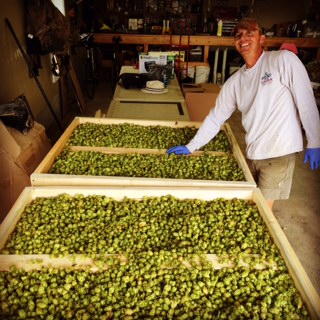
As you can see in the photo of our final product, this activity appears suspicious, since we're handling green plant material and packaging it in bulk - not to mention there is a lot of it.
So the buyer comes into the garage and asks for Heather. After a moment, he notices the bags of green product all around us - his eyes grew big as saucers before he turned to knock on the door and ask for her!
Over the course of the growing season we'd had some visits from brewers, and I had done a few other outreach activities to let everyone know about our first harvest. Once I had the lab results and quantities, I did some follow-up activities.
Soon we had orders from five craft breweries in Virginia, and we've also sold to home brewers in Florida, California, Pennsylvania, and Virginia! Needless to say, our success at selling the hops far exceed anything I expected. I can't wait to hear that they've got their beers ready and on tap - I hope to be able to make a visit to each one to celebrate!
So this post concludes the series on our first harvest at Hawksbill Hop Yards. What a great and unique insight being a hops farmer gives to the craft brewing industry! We have some expansion and improvement plans for the hop yard this fall and next spring, and then we'll get started again on the whole thing.
It's been a lot of fun, even though it was hard work the whole way. But to be honest, I can't wait until next year!
Tuesday, August 25, 2015
The 2015 Hops Harvest @hawksbillhops - Part 5
| Here's a tray of Cascades, ready for sampling and packaging - bowl and scale in the foreground. |
![]() |
| Thanks to David Sours for this photo - working late into the evening to package our first batch of dried hops! |
By the second day of drying and packaging, the activities had settled into a routine. Once we loaded the HOP-N-ATOR 4000 with fresh wet hop cones, and ensured they were distributed evenly, we closed up the machine and turned on the heater and fans to get things going. (Our first batch had taken 30+ hours to dry, so we improved the machine with a little space heater - we'll probably upgrade this part of the operation next year!)
| Here's a few Cascade cones that I tore apart for inspection after they'd been dried. |
This seemed to me to be an excellent application of those operations management classes I loved in business school...in fact I was a tutor for this subject! So I devised a "statistical process control" method for taking periodic samples of the hops to determine our drying progress. I developed a formula for setting a target weight (there was an error in the one I used, so we didn't get all the way down to 18% - plus the lab informed me that no one in Virginia was quite getting there, likely due to our humid climate).
I used the bowl shown in one of the photos as the standard volume to weigh - setting the original weight with a sample from each of the HOP-N-ATOR 4000 trays. After averaging this, I calculated a target rate by using an interval formula (note that this is where the error in my calculations crept in). Then I pulled a sample or two from each of the trays every few hours to measure progress, and to estimate the remaining drying time.
| This wheat beer from @boulevard_beer became my refreshment of choice during hops drying. Our operation is too small to supply them, though (I asked). |
The next post will be the final in this series. I'll post the alphas and betas we achieved on our inaugural crop, talk about yields, and also will discuss some of the improvements we have in mind for next year.
Sunday, August 23, 2015
The 2015 Hops Harvest @hawksbillhops - Part 4
| Thanks to our 15 or so volunteers who came out to pick for us - and many of them in their t-short "uniform"! |
We did a few fun things to organize this, including a Facebook event page - we named it "Harvest Daze", for example - and I started looking for a nice swag opportunity for the volunteers that might show up. Eventually, we settled on the ubiquitous pint - or shaker - glass that is often used to serve draft beers. There's a photo below.
| No good volunteer deed at Hawksbill Hop Yards goes unswagged! |
By now, as you can see in the photo of the volunteers, we'd figured out how to house the activities under the pole barn, so everyone worked in the shade. David, Grayson, and I had gone out to the field earlier to cut down a full row of Cascades for everyone to work on - the one featured in this post.
Back when I was reading up on what it would take to build a hops farm, there were notes that on average it takes 45 minutes to pick a bine clean...someday I'll do the math to see what our average was, but I don't think we saw that in our first year, for sure. Even so, the cheerful volunteers working with us made it through the 60 bines in less than three hours. It was a good time.
We really have enjoyed the community support we received this year - including all the volunteer hands we benefited from in our two events.
In my next post, the second-to-last in this harvest series, we'll take a look at the packaging operation we put together for the crop.
Friday, August 21, 2015
The 2015 Hops Harvest @hawksbillhops - Part 3
![]() |
| Here's a look at some fresh hops - right from the field! |
This photo was taken from the trailer bed early in the morning. Our approach was to go out and take down the bines for each day's work early, before the heat of the day got up. The quality of hops can suffer pretty quickly if that heat isn't managed - fortunately we had some cooler days, and a light rain on one or two of them, which actually worked in our favor, even if it was somewhat uncomfortable.
| A couple of team members loading the HOP-N-ATOR 4000. |
Once all of the hops were picked off of the bines, we'd take the produce crates and store them in the farm's walk-in cooler until we had all of the variety for that day. I mentioned the haul from day 2 - which was about 32 "wet" pounds from the CTZ/Columbus and the Chinook, but on each of the remaining 3 picking days we had a similar amount from the Cascade rows.
We took two of those rows on Friday, one on Saturday - the day of our harvest event, which I'll write about in the next post - and the final two on Monday. It's not just that we had so many rows of Cascade - these bines are well suited to the US climate and have proven to do well in Virginia, so they were simply bountiful.
![]() |
| Dried hops, fresh from the HOP-N-ATOR 4000. |
The final photo of the day has David showing off the dried hops after their stint in the HOP-N-ATOR 4000. While our machine did not dry the hops to an optimal 8% moisture, we did manage to get them down to 28% or so. That's enough to stabilize them so they'll retain their potency a few months, and we will handle them by freezing what we don't quickly sell, in order to ensure their quality.
The moisture percentage is a factor we'll work on next year, along with ensuring we can handle the harvest quantities we expect from the maturing bines. As we make progress on those ideas, I'll add some posts - but it will probably be in the winter. Meanwhile, the next post will be about our volunteer harvest event, which we called "Hawksbill Hops Harvest Daze!"
Wednesday, August 19, 2015
The 2015 Hops Harvest @hawksbillhops - Part 2
| Grayson was up in the bucket, with David driving, as we took the bines down from the trellis. |
Our plan was to work on the CTZ/Columbus rows first, since they were the first to have cones. In fact, there were ripe cones on this row as early as July 4, so I wanted to get them down soonest.
| Here are the first few CTZ/Columbus bines as we began taking them down. |
We'd gone ahead down the row to cut the plants at two to four feet high so that we could keep Grayson moving up there while I hauled the cut bines off to the trailer. When we changed the set up, it was simply to put the trailer behind the tractor so that we didn't have to keep moving the truck to keep up with everything.
| Here's the SPI crew at work picking CTZ. Still early in the process - we had the bines stockpiled on the trailer. |
With only two rows each of CTZ/Columbus and Chinook, and with each these bines producing less than the Cascades, we quickly made our way through the two varieties. Our thought was to get our SPI crew, shown in the photo to the left, started on the CTZ so they could get the hang of what we wanted them to do before they got to the more productive Cascade, which would be on Friday.
We set them up on one of the long produce tables and the team got to work picking, putting the cones into produce baskets. Once they finished a bine, they put it on the floor and either I or somebody else came around to put them in a discard pile - we'll compost the waste for this year.
| Here's our first bin of hops - about four pounds "wet." |
To the right in the photo of the SPI crew is a crate of sweet corn and some flats of tomatoes - on Thursday, one of David's Public House Produce customers comes by for a pick up. When those items were gone on Friday, we were able to put the trailer in that spot and do all the work in the shade of the pole barn.
The team made their way through the first variety by late morning, so we went back into the field to bring in the Chinook crop, which they set out on after lunch, and finished by the end of the day.
Our haul on these two varieties was a total of about eight bins, which weighed about four pounds each - 32 pounds "wet" total. We'd take these over to the HOP-N-ATOR 4000 next, so that we could dry them, and that's where the next post will pick up.
Monday, August 17, 2015
The 2015 Hops Harvest @hawksbillhops - Part 1
| Here's a row of Cascades, ready for harvest. |
| Our plan for oasting. |
The first thing on my mind was building an oast - the heated air dryer that is used to dry the hops. We'd talked about this process a number of times over the growing season, but now the rubber was hitting the road and we needed to get out there and actually do it. David sketched out a straightforward design on the CSA board, and we headed over to the co-op for the lumber and materials we needed.
| The finished oast - the HOP-N-ATOR 4000! |
We were able to accomplish all this with only one trip to the co-op - no return trips because of some failure of design or bill of materials slip up. David entrusted me with the use of some of the power tools as well - I didn't hurt myself or him in the process - and we got most of the unit done without any major mistakes. And plenty of laughs.
The unit is covered on all four sides with a small opening at the bottom to ensure that the air is drawn in consistently through all of the hop cones resting in the bins. We recycled four barn fans for the air power, and eventually added a space heater as a heat source.
| Additional details - powered by four barn fans. |
When all was said and done, we had our oast. We turned those fans on and watch how the powerful breeze drew through the machine.
It's a good machine, good enough to deserve a name, so we christened it the HOP-N-ATOR 4000, which is named after another utilitarian item that was in use at the farm a few years ago when I was on my internship.
Next year, we may need an upgrade to an eight-shelf unit - the HOP-N-ATOR 8000, and ultimately we could have both of them in operation for the duration of the harvest. But for now, our first day's work was done - we had our machine, and picking could begin on Thursday morning...as soon as I got to the farm.
Wednesday, August 12, 2015
Page County Grown - the 2015 Farm-to-Table Dinner
Last Saturday, the Mimslyn Inn hosted the fourth annual Page County Grown farm-to-table dinner. It's an event we still look forward to every year, so Mary and I made early plans to attend, despite some reservation snafus I hope they can fix before next year.
We were joined by many of our friends, most of whom have also attended the events in the past. And as always, the dinner chef Chris prepared from fresh local ingredients was a delight.
From some of the conversations I have had with the other members, there have been some successes over the last few years - there are new farmers and there are new markets. But there are still opportunities, and I guess my challenge will be to identify those and help the organization take advantage of them.
I was enjoying myself so much at the dinner, I forgot to take photos of every course as I have done in the past. So these two are some highlights, the appetizer first course and the dessert last course. All paired with some favorite wines from Wisteria...it's a treat to look forward to again next year!
Thursday, August 6, 2015
Nature Break at Hawksbill Cabin
I was taking care of some chores on Saturday afternoon and happened to catch a little movement out of the corner of my eye. It turned out to be this little praying mantis, no more than an inch and a half long.
We get them every year in the gardens at the cabin, sometimes I see them when they're young, but more frequently I see the mature ones, since they're bigger and much easier to spot. I think this is the smallest one I've seen to date.
I hope it gets its fill of some of our bugs.
We get them every year in the gardens at the cabin, sometimes I see them when they're young, but more frequently I see the mature ones, since they're bigger and much easier to spot. I think this is the smallest one I've seen to date.
I hope it gets its fill of some of our bugs.
Tuesday, August 4, 2015
Next Week We Harvest @hawksbillhops
We've begun making preparations for the harvest at Hawksbill Hop Yards. When I look at the plants now, it's hard to believe that it has only been three months since we had our planting event (blog posts here). Our Cascades are doing especially well, considering they're only in their first year, and we're "hoppy" with the action overo n the Chinook and Columbus/CTZ rows as well.
On Saturday we'll have a harvest event at the farm - we've invited the volunteers who helped with planting to come back out to see how things are doing, and to help with picking the cones. In the meantime, we're working on our oasting and storage solutions - there is a lot of interest in the hops, and it looks like we'll have a good amount to contribute to the Virginia craft brewers market!
The hop yards shares the farm with Public House Produce, where the tomato season is just getting underway - it reminded me of this old post from 2011. When I was out at the yard yesterday, I came back around to the pole barn to have a look around, and David had set these out to cure and ripen. There are several heritage varieties here, including the famous "pineapple."
Our final preparations for the harvest continue - we hope to see all our friends at the farm next weekend!
Monday, August 3, 2015
Returning the Favor @pendruidbrewing
| Pen Druid's soft opening on July 31. |
Flash forward a few weeks, and here we are with the Pen Druid Brewing soft opening on August 1 - neighbor Dan and I trekked over to have a look around and try some truly crafty beers! David couldn't join us for the visit, since he and Heather were up in Frederick for a race, but we'll make a plan for a follow-on visit soon.
| Enjoying the vibe with the Pen Druid team! |
I first learned about this team back in May, during a visit up to Black Hops Farm in Lucketts - somehow I missed posting about that road trip. I met with Jonathan up there and he showed me around the operation - again, lots of collaboration and creativity going on, and that's an aspect of this whole thing that is really growing on me.
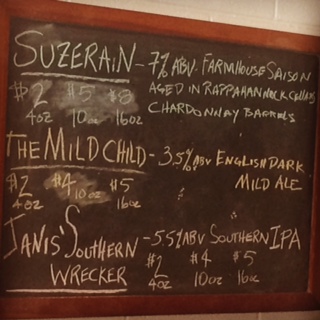
That's really the theme of this brewery, as you can see on the tap board from our visit. Dan and I sampled all three of the offerings, and got a little tour of the place as well. We tried the 10 oz. pours of all three beers - doing an "ABV ladder," starting with The Mild Child before progressing through Janis' Southern Wrecker and Suzerain.
| Creativity in chalk. I think Pen Druid is a good example of what craft brewing is all about. |
They obtained a chardonnay barrel from one of the nearby wineries and aged this Saison in it. From the process, this beer picked up some wonderful flavors that are complex and delicious - but still respect the summer's heat - so they are very refreshing.
| These barrels are part of the creative process at Pen Druid. |
It's terrific to have this new brewery so close. I'm looking forward to future visits - and perhaps some collaborations with hops from Hawksbill Hop Yards!
Congrats guys!
Subscribe to:
Posts (Atom)