 |
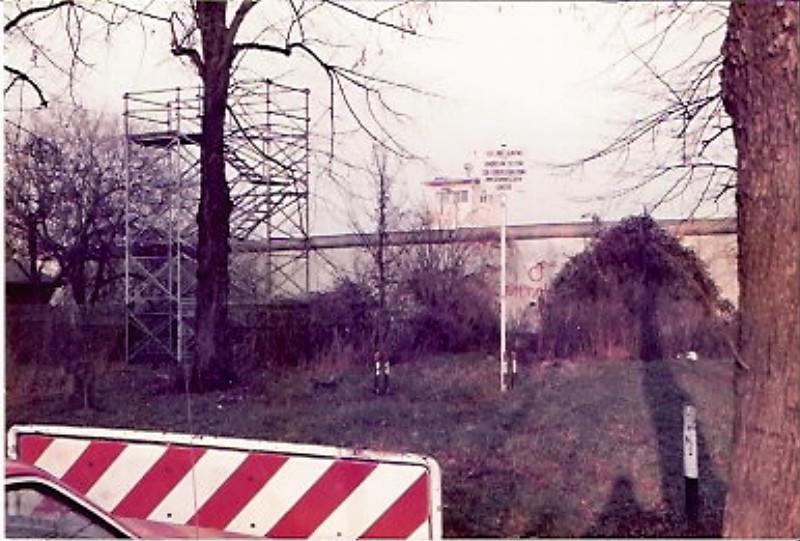
| Timelapse photo of the Berlin Wall in the 1980's - on the right, a photo I took in the Neukolln District in October 1984, and on the left from an unsourced link on Facebook. I wrote about this in a blog post here. |
The post is one of a series of five posts about Andersen's Cold War Army experiences in the Army, celebrating his memories while also enjoying a trip to those familiar places. I enjoyed reading about how he came to terms with those things, my own denouement is derived from two return trips to Berlin since I left in April 1986 (on the heels of the LaBelle Discotheque bombing), and I have several friends who return on business annually, so I still have plenty of opportunity for introspection.
As I read Andersen's Daily Kos piece, three ideas came to mind:
- Andersen closes with his impression of Berlin as a "beautiful, vibrant city, at once old and new." Postwar Berlin is obsessed with the process of rebuilding and renewal, so it features many architectural projects showcasing design and technology trends for residential and office buildings. Since 1989 and reunification shortly afterwards, the building process accelerated here and elsewhere, so that now the international style dominates every European skyline. In Berlin, however, once you get to street level you see and experience that whisper of memory about the Cold War division, and if you look closely enough, you find the line of the Wall is left behind as a scar on the streets and pavements. Even in this juxtaposition of old and new, I'm left with an optimism about where we'll go next as a society. And I guess I'm overdue for another visit (my last was in May 2001).
 |
| Photos from an event we went to at Newseum in 2012 (post here). Left to right: Old East German guard tower, Mary and me near one of the old border signs, and a few segments of the Wall. |
- Andersen describes the anxiety he feels while climbing one of the old guard towers (there's an excellent accompanying photo!) - I've shared that emotion. I've had the chance to find the memorial to those who died trying to escape from the East, located along the Wall's old past at the Spree River near the Reichstag. There are Wall sections and a reassembled tower at the Newseum in DC and the book Stasiland are both sure to provoke those feelings, and to remind us of why we're having them.
- Recounting trips to the East, Andersen mentions the bleak, black and white impression of his experience there. I swear that one time I left the West, on a sunny spring morning, only to arrive in an overcast East, to find a brutal chill and snow flurries. Our minds were shaped by the propaganda on our side, all those shiny new buildings and the sparkling western economic showpiece of the Ku'Damm.
I look forward to finding articles on this topic, and I certainly enjoyed Mark E. Andersen's post. As they always do, this article led me to a moment of introspection to see if I had learned anything since the last time I thought about the Cold War and my time in Berlin. Certainly there must be conclusions that can inform how we respond to the events of today: an emerging Russia asserting a leadership role in the world; continued suffering under authoritarian regimes in North Korea and elsewhere; and the optimism of a warming relationship with Cuba.
I'm left with a memory of my own, from the last of four visits I made to East Berlin during my years there. I went to a sporting goods store with the idea of buying some equipment and had settled on a funny dumb bell, shaped like a western hand grenade. As a reminder, the regulations for travel required that we go in groups of six or more, in uniform - some of my colleagues were in the store elsewhere, spread throughout, looking for souvenirs.
Soon I realized I was standing there next to a Soviet Army officer considering his own purchase. He was buying one of those pocket fisherman, similar to this one by Ronco. I considered the irony of the experience: here we'd been trained to be adversaries, but just at this moment we were focused on the same thing, finding a source of recreation during our down time. I put down my hand grenade and decided to look for an alternative memento.
Something changed for me at that moment. At the end of the day everyone "over there" in the East, in the Warsaw Pact, were all still people, just as we were in the West. The condition of their lives was different, sometimes vastly different, but we had a lot in common in the stories of our loved ones, our pastimes, and in the basic motivations that drive us as people.
While this awareness never compromised my work, it remained in the back of my mind all those years as I thought about those citizens as individuals, not as a force, and not as subjects of those adversarial regimes. I guess it's a philosophy that remains with me to this day.
I am sorry that even in our modern era there is no alternative to war to solve some conflicts. There is a huge price to pay for that, an impact to those who remain behind afterwards, both civilians and veterans. This year, during the election, I am looking for opportunities to embrace and acknowledge this simple concept; I guess that if there is indeed any resolution from the experiences of my enlistment, this would be it, maybe an opportunity to contribute to some small change in the world.


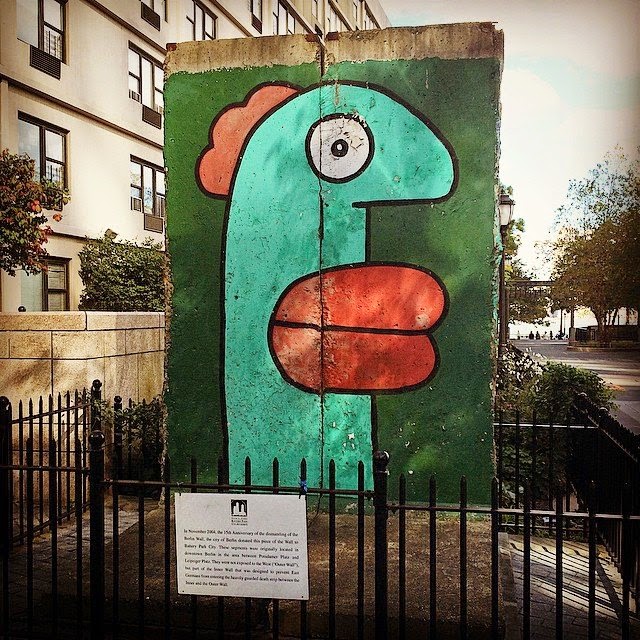




 The next one - "Rambo" - is a fairly typical example of the polyglot graffiti you'd see on the Wall. There's Russian at the top - "Shnoozel loves Shni..." - where the text is cut off in the photo, and there are those drawings of Yuki and Tsutomu at the bottom, where it also says "Come on Tokyo."


