Ramble On

Wednesday, November 10, 2010

Lynchburg...Next Project

From the lobby of the Craddock-Terry, it was hard to miss the fact that something was going on in the old mill next door.  Later on our hosts confirmed that the mill is going through a renovation to become apartments, and that they had arranged a site visit for Sunday afternoon.

This development is rushed a little bit - the developer was forced movement on the project because of the condition of the building.  It's not an economy that you would rush into residential development like this, except that the fire risks with this place were extreme and even threatened the nearby structures, if one were to start.

I took a load of photos in that old dusty space inside, but will reserve most of them, choosing only a few highlights.  Like the old shoe factory and tobacco warehouse, where the hotel is now located, the building is totally timber framed.  There is termite damage in evidence, but since the live loads here aren't what they used to be when the mill was active (as late as the 1960's, I understand), what you have is a lot of redundant load capacity in the framing so some of it can probably come down during demo, as opposed to extensively repairing or replacing it.
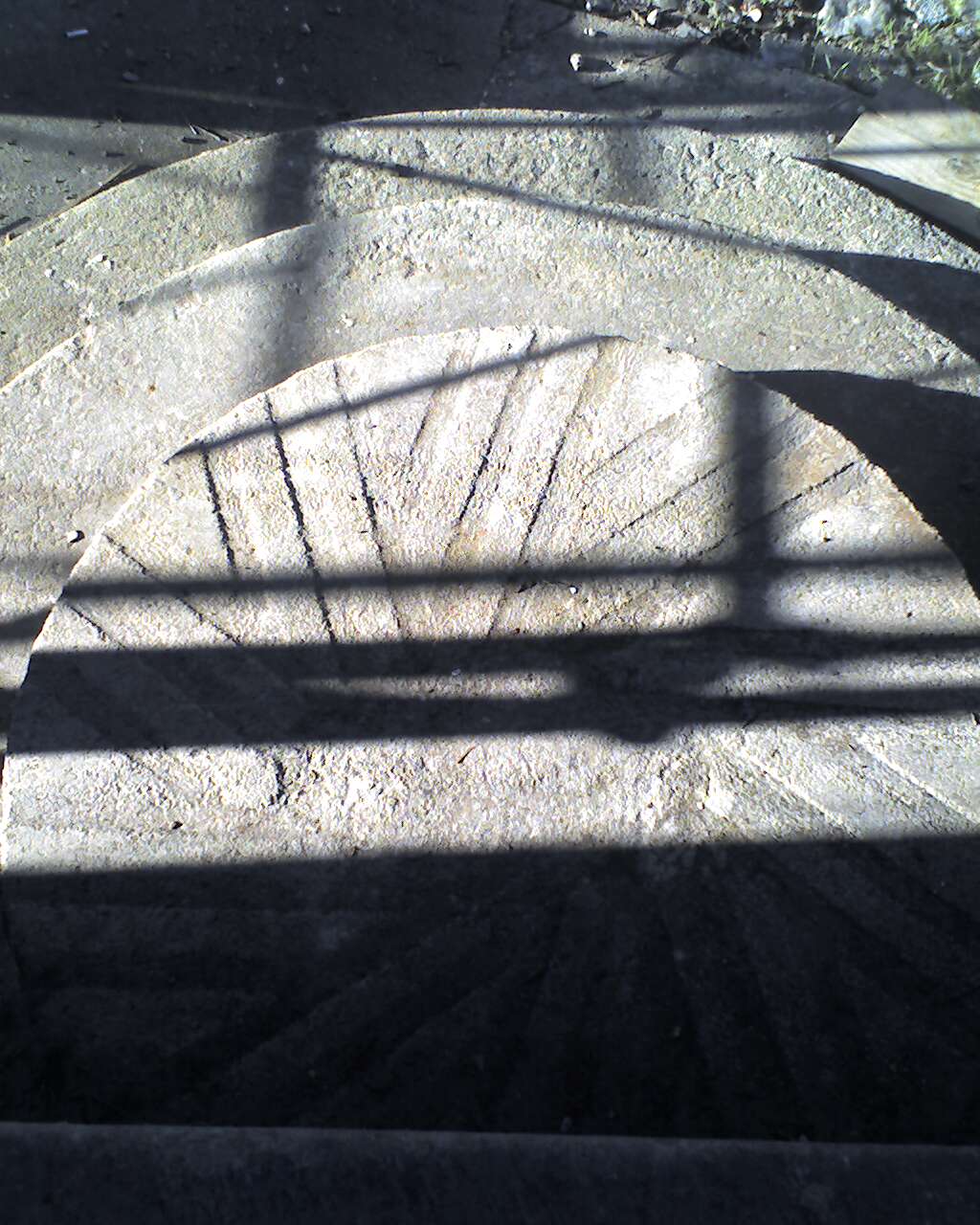

I'm not the biggest fan of round steps, but this entryway into the mill is interesting since an old millstone was incorporated as the top step.  I'm sure some element of this fixture will be saved in the final, but I doubt it will stand as a main doorway into the building.

It was interesting to walk through the place - ghostly images from the sharp angled light of unglazed windows, dust clouds coming up with the passage of all us tourists, and most impressively, views of machinery for a production system from the industrial age - set us up for an adventure of the imagination...not only of what kind of living spaces this building will include, but of the lifestyle, noise and constant danger of all these machines at work with people crowded into the space too closely.


As I understand it, while we did not go down into the substructure, there is an old canal under the building that probably was used to bring water into the production facilities - the river is quite nearby, probably less than 500 feet away.  There are also old tunnels and culverts that we used with conveying systems to the railroad tracks.  There are right-of-ways for CSX and Norfolk Southern that run along the river next to the mill, and an old siding next to the mill that probably served to load out finished goods.

A set of silos is also nearby, on the side of the mill opposite the tracks, you can see it in the photo of the siding.  It doesn't seem an optimal layout, but since it is further uphill, it may have been placed there for flood plain purposes.  These are planned for a future renovation, when they will be repurposed into apartments also.  We saw some preliminary plans for this development - some of the spaces have the potential to be quite grand, with 18 foot diameter rooms and sweeping views of the river. 

A final note on the silos, this inventory/schedule board is still standing in the old mill.  There are still production notes on it - maybe 50 years later, since the mill ceased operation!

Here is a view of the penthouse space at the top of the mill building.  My sense of it is this will be a great apartment someday.
The last photo I will share from the mill is this one of the "man lift" - this is a single person elevator!  It runs on a conveyor belt system.  There was a little platform to stand on, with handholds above the head to cling to...you had to be trained to use it, and I imagine that there were a few injuries associated with its use over the years.  The warning sign here isn't something you can just blow off either.  I think I would have to use the stairs, myself.
I have one last Lynchburg post that I'm saving for tomorrow, then we will get back to Page County and Hawksbill Cabin material.


Tuesday, November 9, 2010

Lynchburg - Town Views


On Sunday morning, I had about an hour’s worth of time on my hands so I decided to take a walk around the town of Lynchburg. It’s a pretty place, set on a series of cascading bluffs that roll right down to the James River. The river itself is the key to the city’s success – the place is named for John Lynch, who ran the first ferry across the river here.


A Wikipedia article at http://en.wikipedia.org/wiki/Lynchburg,_Virginia  includes all the facts you’d want to know about the place - it's had quite a history as a center of commerce and industry. There is a lot to tell, besides the fact that this is the home of Liberty University and “Jerry Falwell World.“ In fact, that association alone was enough to keep me from ever wanting to come here, even though I’ve driven through on US 29 a few times and thought the place was beautiful.


So on my walk, I was giving the town a chance to grow on me, in a way. I liked what I saw, and what I was hearing about the downtown community and their initiatives to make the city a great place to live. There is no choice but to have something of a symbiotic relationship with the big school in the suburbs, but for the most part, that community seems to keep to itself. There are quite a few other great colleges and universities that call themselves home here, too – and those communities are often part of downtown events and commerce.

Among the photos I collected, there is a shot of the Allied Arts building downtown, an art deco tower built in 1931; an interesting elevator that was designed as a solution to getting down the bluffs from the upper town to downtown (there are staircases all over the place); the farmers’ market; and a view down to the river, where the fountain here is set on one of the piers of an old bridge. The fountain draws your eye to the river, parks, and other cultural attractions located in that part of town.

With just an hour, I didn’t have time to get into any of the historic neighborhoods – Lynchburg was a prosperous town in the mid-1800’s but escaped burning during the Civil War – there are several neighborhoods of historic homes that have been restored and are well-kept. Mary’s told me she’d be interested in a return visit to check the place out sometime…I guess I’m up for that too.

Lynchburg - The Hotel Renovation Story, Continued


In the post yesterday, I mentioned some historic aspects of the Craddock-Terry hotel that make for an excellent story, and that's a big part of what makes it a success when it comes to being a well-liked boutique hotel.  I'll start today's post with another view of the main building, which was renovated after sitting empty for more than 20 years - this is the building that was the Craddock-Terry shoe factory.

The hotel complex includes a second building, which housed a tobacco warehouse owned by the King company.  This building was renovated to include hotel rooms, meeting spaces (on Saturday, there was a wedding, then our group used the spaces for seminar sessions on Sunday), a fine dining restaurant, and a pizza/brew pub.  It is connected to the main building by a plaza and the accessible bridge walkway shown in the picture above.

The brew pub was hopping the whole time we were visiting, and the restaurant had a full seating on Saturday night.  The hotel was fully booked also, in part because of the wedding and also because of the 10+ rooms our group had taken.  So it's safe to say this was a successful project.

We learned about the value of the good story, and the community partnerships - these were two themes of the visit, in fact.  One point of interest is the red shoe motif in the signage that decorates the exterior of the hotel.  It turns out that the red shoe has a story of its own within the larger history of the Craddock-Terry company.


Sometime in the mid '70's, the fashion advertisements for one of the shoe brands started featuring red shoes on the models.  These three prints, that decorate the hallways of the tobacco warehouse building, were made from the old ads.  The originals, it turns out, were found in one of the investor's attics.  That persons mother had been a graphic artist involved in developing the original illustrations, and the artwork was stored with some other old keepsakes.  The hotel renovation became a cause to bring them back to light, and here they have made there way to being a feature of the place.

One final note on the story that weaves its way throughout this hotel experience.  Each room's door features a piece of artwork modeled on one of the shoes that might have been manufactured at the old factory.  I've featured room 403 - to my knowledge, none of the people traveling with us stayed here.  But the odd-numbered rooms are the king rooms, that much I do know. 

There are still some expansion plans to note - a new building with more hotel rooms is planned for the area the first photograph was taken from.  It will connect to the main building with an accessible bridge as well.  A rocky bluff - one of Lynchburg's motifs - runs through the block, in fact the main building sits atop it.  They want to put in a water feature here to complete the complex.

I still have some additional posts to make about Lynchburg, and those will be coming along for the next couple of days.

Monday, November 8, 2010

Lynchburg - More on the Craddock-Terry

Bear with me.  I have a couple of posts still to come about the visit to Lynchburg over the weekend.  This morning, a few more interior shots of the main hotel building...this afternoon, a little post about the adjoining building, which houses some restaurants and meeting spaces, as well as additional hotel rooms. 

Tomorrow, I will post some photos of the downtown area, and Wednesday, photos of a new renovation/repurposing of an industrial building that is underway near the hotel.  We'll get back to my beloved Page County topics shortly!

This concept of reuse, repurposing, renovating historic buildings is very exciting.  The students we were traveling with called the Craddock-Terry hotel a "dream project" - the "project of a lifetime" - and it is hard to underestimate how rewarding it might be to get involved in something like this.  And for the developer, who is related to the Craddocks, the family who the shoe company was named for (I found this link but haven't explored it yet:  http://www.vahistorical.org/publications/historycorner_craddock.htm.), the project had to be even more exciting.

(Full disclosure, the involvement of the name Craddock made this visit special for me, too - it's my mother's and aunt's maiden name.)

So touring the building, checking out the wonderful timber framing and considering the fact that they could still be structurally sound nearly 100 years later was fascinating.  They've put together a wonderful boutique lodging experience, all shoe-themed, given the heritage of the main building as an old shoe factory.

Here are interior views of some of the large beams in the lobby area - the factory was closed for 20 years or more before the renovation project began, and the steel plating here is either a reinforcement or a patch that had to be made due to termite damage.  In the reinforcements, there is not joint visible in the members, while the patches involved salvaging excess beams (the loads on the frame are much less with a hotel than with a factory use) and replacing severly damaged areas with them.

Also, two views of interior hallways, one below grade, showing the stone foundation walls, and the second, a higher floor, where the timber columns are visible.  I did not take any photos inside the rooms, but they were very nice, large, and nothing like the cookie-cutter experience you have in the larger chains.  I'll leave you to the website to explore those, if you like.

Next post will include a photo of the King Tobacco Warehouse that was restored next door, and some photos of art work on the interior hallways. 


Sunday, November 7, 2010

Field Trip to Lynchburg


We're on a field trip with Mary's U of Md group (she teaches in the historic preservation department, for those who don't know) to Lynchburg, meeting a developer who's working in the downtown historic district.

One of the projects is the hotel we are staying at, the Craddock-Terry, which used to be a shoe factory (among the recognizable brands:  Buster Brown shoes).  I have a few photos of the hotel interiors to share in some follow-up posts and hope to get a walk in down by the river in a bit.

Meanwhile, here is the front of the hotel, a view of the lobby (with the students checking in), and a detail shot of one of the column-beam connections in the lobby.  The hotel was not in use for 20 years ago, so a lot of work had to be done during renovations, included termite patches to the beams.  I may post some photos of that later.

Here's a link to the hotel...watch out for the elevator music.
http://www.craddockterryhotel.com/index.cfm

Saturday, November 6, 2010

Curried WInter Squash Soup


This week I made my first winter squash dish – readers may recall that I picked up a couple of squash from Public House Produce (link at the end of this post) on the Luray Farmers’ Market’s last day, early October. The squash I have on hand are in the second photo, the banana squash I used this time is the large one on the left.  I have several other dishes planned for future experiments.


My recipe originated with one I found in The Silver Palate Cookbook, I tinker with it some, but I’ve been making this soup for ten years or so based on this recipe. There is an Amazon link to the book at the end of the post also.

 
Three notes about the main experiments I did this time: I used banana squash instead of butternut, and I don’t put all the curry in at the same time. As far as types of squash go, besides the banana squash, which has a wonderful, papaya-esque color to it, I’ve also used acorn squash – of course, I have used butternut as the recipe calls for. To speed things up you can get pre-cooked butternut squash seasonally at Williams Sonoma.

 
I used a low sodium chicken stock this time. I considered vegetable stock, but I was short of time and the version they had at whole foods was fairly high in sodium, I thought. I have cooked the recipe both ways – chicken stock, or vegetable stock – many times. Also, I substituted a cup of white wine for the apple juice.

 
On the curry, since the spice has a strong taste, I recommend you add it later in the process, and incrementally, especially if you aren’t familiar with it. In the version I made this week I wanted a lighter flavor, but still with a little bite; I still probably only used about half the amount shown here in the recipe – I was using “hot madras” curry though.

 
That said, here is the recipe:

 
  • 4 tablespoons sweet butter 
  • 2 cups finely chopped yellow onions 
  • 4 to 5 teaspoons curry powder 
  • 2 medium-sized butternut squash (about 3 pounds) 
  • 2 apples, peeled, cored, and chopped 
  • 3 cups chicken stock 
  • 1 cup apple juice  
  • Salt and pepper to taste 
  • 1 shredded unpeeled Granny Smith apple for garnish

 1. Melt the butter, add the onions and curry. Cook covered on low heat until tender – 20 – 25 minutes.

 2. Peel the squash, remove seeds and strings, and chop. Be prepared, peeling winter squash is the hardest part of the recipe.

 3. When the onions are ready, pout in the stock, add the squash and apples, and bring to a boil. Then take down to lower heat and simmer until all is tender – should be less than 30 minutes.

 4. Strain the soup and reserve the liquid. Process the solids in a blender or food processor, using some of the liquid, until smooth.

 5. Combine the processed soup with the reserved liquid, to the desired thickness/consistency.

 6. Salt and pepper to taste and heat through. Serve immediately, garnished if you like.

 
This recipe make four to six portions. Mary and I often freeze the leftovers. Especially this time, with the banana squash – we have quite a bit leftover!

Public House Produce link:  http://publichouseproduce.com/

Friday, November 5, 2010

GWNF/Massanutten Fire - Final

Yesterday's Page News & Courier had a story on the fire I've been tracking for the last two weeks.  Along with an interview with the USFS Fire Zone Manager, the article, linked below, includes a little more detail about why this fire - officially known as the Lokey Hollow Fire - has been so difficult to put out. 

Apparently with the leaves still in the process of falling, this fire is constantly getting more fuel so that the hotspots can reignite.  While there has been some rain during the course of the fire, once the leaves fall, if there is a short dry spell, they can quickly get to the state where they will spark flames.  Another problem is smoldering tree stumps and trunks, which is still an active part of the fire long after it has been brought under control.

So PNC has it that the fire is 75% contained after burning approximately 600 acres.  Up to 50 firefighters, who came from as far away as California and Montana, were involved in fighting the blaze.  On Tuesday afternoon, PNC's press time, about 20 were still on the scene, mainly watching the roads which were used as fire breaks during this course of this one.

Unless this fire breaks out into something much larger, we'll call this the last post on it.  You can check out the previous Lokey Hollow posts by clicking the "GWNF Fires" label that follows this post.

Link to PNC article:  http://www.dailynews-record.com/pnc_details.php?AID=51928&CHID=42

Thursday, November 4, 2010

Marathon Runners


Over the weekend we were visited by a couple of friends up from Florida who were participating in Marine Corps Marathon (MCM) activities.  One of them ran the marathon, and two others ran in the 10K event that accompanied it.  Congrats to Bill, Dodi, and Galen!

I also rec'd a letter over the weekend from a service buddy, Dale, who ran in the Chicago Marathon in October.  Dale ran for a cause, to raise funds for the Leukemia and Lymphoma Society.  Dale reports his personal best time of 4:11:56 for the marathon, his third; but even better, he was able to raise over $3K for the cause - he did this to honor his sister Nickie, who's life was taken by Burkitt's Lymphonma in 2004.  I was honored to be a part of his efforts.  Congrats to Dale, and thanks for keeping me posted on the results.

Galen mentioned that he has a website called http://www.marathonmedals.com/ , which is designed to allow people to post their marathon medals from past events.  I told him I had run in Berlin in 1983 and he invited me to submit some of my old stuff.  Because I have fresh scans, I am including the materials I sent him here - they haven't been posted yet on his site.

Included were:
  • Scan of the "reverse" of the 1983 medal
  • Scan of the route map published in the base newspaper
  • Scan of my finish "proof" photo (my friend and marathon training partner Shybuck is seen finishing in the background in red)

All this inspires me.  But I don't yet know what I would do with that inspiration.

One thing I do know, seeing the Berliner Kindl ad in that photo...

Wednesday, November 3, 2010

Willow Grove Mill: A Luray Point of Interest


On Saturday, with a couple of visitors out for the day, we took in a couple of Page Valley sites. After a picnic near Hawksbill Creek at Wisteria Farm and Vineyards, we drove into town via the Ida Loop and made a stop at Willow Grove Mill. I’ve driven past the mill hundreds of times, but this is the first time I ever pulled over to take a look around – I’m glad we finally did.


Apparently, the mill is typical of dozens of mills that populated the area in the 1800’s. This one was owned by the Ruffners, which was one of Luray’s early families – in fact, they provided the original land for the founding of the town. Their land was along both sides of Hawksbill Creek from this area down to where it flows into the Shenandoah River.

Last week, I mentioned Stonewall Jackson’s commitment to protecting the “breadbasket of the Confederacy” – this mill was part of the agricultural industry he was making reference to. The historic marker (http://www.hmdb.org/marker.asp?marker=11034 – none of my photos are good enough to republish) talks about the 1864 Valley campaign that burned this and other production facilities

The family that owns the farms now has a little farm store on US 340 by the Creek. There are lots of local treats to be had, but one highlight is some heritage items about the mill’s operation, including this flour bag. I snapped this photo a few weeks ago during a stop.

The mill was recently featured in a new town mural, which can be seen along the Hawksbill Greenway. The building is prominent, but a couple of highlights have been added to emphasize other aspects of Valley life – there are some hunting dogs in the foreground, and a row of re-enactor tents can be seen in the background.

The URL for the marker says there are quite a few other points of interest within two miles of the mill. I need to make a point of finding them all and checking them out.

Tuesday, November 2, 2010

Politics Respite: Clarendon Farmers' Market

Turning to a topic that I much prefer to write about on the blog today - visits to local farmers' markets.  This time, it's the little market that sets up on Wednesday afternoons at the Clarendon Metro station, right across the street from my office.
For a good part of the summer, I worked downtown this year and missed the height of the season.  But last Wednesday, there was still a good selection - and even in October, you could still find a fresh tomato.  Of course, fall vegetables were in abundance - squash and greens, along with turnips and beets.

My office mate Jack talked me into going down (from our perch on the 8th floor overlooking the station) to pick up a few things.  He'd found a pickle guy - last photo here - and I remembered the excellent ones I had gotten at the Mountain View Market earlier in the summer.  I bought a little container of dills - they're crisp and garlicky...nice.

Jack's visible in the photo with the winter squash - taking a look at the potatoes. 

In addition to the pickles, I got some beets, some bosc pears, a couple of acorn squash, and two pumpkin loaves from the bread maker.
It is the end of season for many of these vendors, and they will be scaling back where they travel to for weekly markets.  One of the vendors I spoke with, who run a CSA out of Stafford, said they will be continuing at the Fredericksburg market and at their own farm stand.

They were typical for the Clarendon Market - most of the folks here at this location come from the east side of the Blue Ridge.  I didn't see anybody here from the Valley.

Monday, November 1, 2010

GWNF/Massanutten Fire - Monday Update

By way of an update on the fire that started in GWNF last week, on Sunday Mary and I noticed that it was still smoldering, so we detoured off of US 340 to see if we could get a closer look. What we found was quite a bit more than smoldering!


It turns out, according to reports, that the firefighters have burned another 200 plus or minus acres to stop a blaze. There have been as many as 50 firefighters around, but they are beginning to wind down the operation.

Apparently, the rain last week didn’t put the fire out, but it did slow it down considerably. The firefighters want to fight fire with fire, burning up the fuel in front it, but the wet weather made that difficult until things dried out over the weekend.

It’s a small fire and there isn’t a lot of reporting on it – that’s keeping me from getting updates. But I will post what I get – and right now, the news is that the fire is petering out. We’ll see.

Tea Party Irony - part 3 and final

The “Tea Party Irony” posts last week prompted some reader response, on FB, in person, and via email. It’s a goal of mine to engage comments when I get ‘em, even if I disagree, so I’ll post them today. These reader responses were all posted in a civil tone, which is something the newscasts aren’t communicating – while this morning it does appear that we will have a substantially changed House and a Senate that will have a new balance of representation, the everyday conversations about differences of opinion that I have had seem to be rational and fairly considered, for the most part.


Taking the comments in chronological order, we have Chris and Dave, from FB, and Tony, from email. FB now truncates what you can cut and copy out of the comments there, by the way, so I have edited these down and hope I’ve captured the major points of dialog.

First Chris, addressing the desire for change in this election, and continuing to think about the RV drivers I wrote about last week:

“Perhaps two years ago, like so many others, they thought “yes they can” and voted for “change” and are now reeling from the ramifications of their decision.”

Then Dave, who also gave an explanation of the kind of change he’s looking for:

“I think the idiots and corrupt in both parties should be rooted out…For years, I’ve watched federal agencies screw up everything they touch. Why in the world would I want to enhance the size and power of these bureaucracies whether run by the democrats OR republicans. I want a smaller federal government that does not run up trillions in debt. The first party to offer me that gets my vote.”

Finally Tony, who posted about the election with a reference to the Bloomberg Business Week article that follows:

“…[those] who make less than 50k a year and vote for Republicans are getting what they vote for: an increasingly smaller share of the pie.”

“…we think we are all sharing pretty equally in the wealth pie and would like to share even more fairly!

• Perception? The wealthiest 20% own 58% of the nation’s wealth.
• Target distribution? The wealthiest 20% should own 32% of the nation’s wealth.
• Reality? The wealthiest 20% own 84% of the nations wealth.”

http://www.businessweek.com/magazine/content/10_44/b4201008238184.htm

“We produce 100 times more soldiers than engineers, and a quarter of our doctors are foreign. The unemployment rate would fall by [25%] if only there were qualified applicants for all the open positions in reporting companies.”

So what are the readers who commented really saying? It's the same thing I heard in conversations with other friends over the weekend, when we talked about the great dissatisfaction with the status quo, and about the perception that gets pushed around a lot these days that change for the sake of change is a wise direction. Our politicians need to face the music and make decisions that are the best for the long-term – even if this means they are only in office for one term.

I’m not sure Boehner is up to the task – he certainly has shown poor leadership in the last Congress.  Well, it is a kind of leadership he showed - a sell-out kind:  establishing a “no at all costs” stand and by doing so ensured nothing was accomplished (while earning $150K+ from his Congressional salary and accruing retirement benefits that will ensure a six-figure pension for himself)...is that the kind of leadership that Americans are really looking for in this election?  It doesn't reconcile with Dave's comment above, for one thing.

History will have to be the judge of Palin.  Thanks again to John McCain, for “putting Country First” and introducing her to the political discourse.  Let's hope the damage to our country from her impact doesn't last for long.

Friday, October 29, 2010

Tea Party Irony - part 2

Maybe it’s just simple old me, but in my mind I cannot separate the words and deeds of many of these Tea Party candidates from any other policies this group is trying to champion – whether I agree that they are good ideas or not. The risk that these fringe positions present to our Democracy is just too great. We are all frustrated by the pace of the recovery but we cannot allow those frustrations to cloud our judgment and take our country backwards.


I want to start the post today with a few follow-up thoughts I need to add to yesterday’s, in which I was trying to capture some things that went through my mind while following an RV on Skyline Drive. I don’t begrudge the couple I wrote about yesterday anything; after all, we were both out for the same thing Sunday morning, a bit of recreation in the beautiful setting we have there in Shenandoah. I am sure their retirement is well-earned – and that we all should be able to enjoy a worry-free situation at that age.

And that is really what it’s all about for me, as a Democrat. That couple was enjoying a lifestyle that all of us are trying to earn. The policies our party's candidates propose are meant to preserve and protect the country at large, and create those kinds of opportunities for all, without a preference over one group or another. Yet, when I hear some of the statements coming from some politicians or candidates today – Palin, Miller, Angle, and Paul, to name a few – I don’t hear proposals that resonate with that same goal.

Palin, who this week, by not ruling out a run, threw her hat in the ring for president in 2012, "if there is no candidate out there who seeks to protect the Constitution the way she does" (paraphrased)…yet the candidates she has endorsed have all stated for the record that they would repeal elements of that very same Constitution. Maybe they haven’t read it? It includes instructions on how to amend it…everything in there, subsequent to the first ten amendments, are there because the majority of the country voted in favor of them.

Miller, the Alaskan candidate for Senate, recently suggested that East German policies might work for us here in the United States. Having served in Berlin and closely observed East German policies at work for a few years, I don’t even have to try and digest anything else this guy has to say – I certainly don’t have the patience after such an outrageous concept.

While we are on the topic of these two Alaskans I can’t leave another rhetorical argument aside. That state receives one of the largest shares of federal subsidies per capita of any in the Union. These “income redistributions” from the lower 48 form another irony, in that this is a major “against” issue for the Tea Party, a banner that these two Alaskan politicians proudly fly. At least the write-in candidate in that state, Murkowski, has embraced the simple truth: apparently it’s an Alaskan senator’s job to come to Washington in order to bring home the bacon. If Miller wins, I predict: status quo.

Then we look at Angle from Nevada, who looks to be the favorite for that Senate race – despite racist campaign ads and some mind-boggling speeches to children about race. Some of the early rallying cries for Tea Party activism were “I want my country back.” Exactly how far back does Angle want to take us?

I’ll stop after a note about Paul, the Kentucky candidate – who also looks to be headed for the Senate. The footage of one of his campaign workers stomping someone – a woman, in fact – and the unapologetic remarks that follow this incident, is the single lasting image I will be associating with the Tea Party for the next few years. That is why I put together these two posts. 

Paul’s early statements in his campaign were problematic as well – ones he made about revisiting portions of the Civil Rights Act. Another Constitution lover and protector, right?…at least the part of it that he likes.

In conclusion, I’d add that there is nothing wrong about being frustrated by the need for change, or by the pace of implementing it. That's part of why the Founding Fathers established the electoral cycles they did.  But we need to be careful about who we elect in response to that frustration. The positions I highlighted above are part of the package you get with the Tea Party – they can’t be separated from other parts of the platform.

To me, that means we’ll have to be carefully diligent about protecting the Constitution over the next few years, because Palin, Miller, Angle and Paul are no friends of it. There is a real chance that their era will leave our country with lasting damage, and that is a shame.

I received some comments and feedback from friends on both sides of some of the issues here. I will try to assemble them into follow-up posts over the weekend, and get them up on Monday.

Thursday, October 28, 2010

Tea Party Irony

I’ve stayed away from political commentary this election season on the blog, readers pretty well know where I come down in the spectrum (for a refresher, just click the “inauguration” label below…or let me help you this way: Mary and I met during the 1992 Clinton campaign, after an introduction from a fellow volunteer). But, I saw something Sunday that begs a comment. As I started writing, two or three other things came to mind - and then, a message from an old friend.  So now I’ve got to post a two-parter - I'll try not to rant.


Last Sunday I was driving on Skyline Drive on my way to Blackrock. Up ahead, I saw a large RV winding its way along, pulling a car. Soon enough I caught up, and when I did, I saw the membership bumper sticker for some Tea Party organization in Illinois. The irony just began to hit me as I thought about how the Tea Partiers claim they aren’t an organization, but for some reason we often see this kind of organizational identification association with them.

 
Turning my thoughts to the RV, I remember seeing a recent lifestyle segment on some news program about these vehicles, about how when gas prices went up during Bush to $4 per gallon, these vehicles went out of style. Now that gas is back in the mid-$2 range, they are making a comeback.

 
That same segment told me the average price of a used “Class A” RV is around $90K, although you can find them for less (a search this morning shows one for sale in California for $65K). An analysis of cost of ownership tells me that the life-cycle cost of one of these vehicles shows that as an owner you will spend the purchase price on maintenance every 6 to 8 years…

 
…so the Tea Party couple tooling along Skyline drive effectively has in the neighborhood of $15K to $20K a year to spend on recreation. Now, I started to wonder if this lifestyle is made possible because they are collecting Social Security, or using Medicare. Are they benefiting from the prescription drugs programs for seniors? I’m going to make an assumption here that they have not rejected taking benefits from these programs, despite the Tea Party’s frequent assertion that they aren’t Constitutional, that the provision of programs like this isn’t an appropriate governmental role.

 
My thoughts came back to the drive and maintaining a safe distance, since I had caught up with the RV.

 
We passed a sign that said, “Overlook closed ahead.” For those who aren’t familiar with Skyline Drive, the overlooks are the pull-offs along the way that feature often monumental views of our beloved Page Valley. As we passed the closed overlook, a sign at the entrance and exit points reminded us, “Your stimulus dollars at work…”

 
Back to my well-off fellow travelers driving along in their federally subsidized life-style…another Tea Party contention is that the stimulus program was a stretch for the federal government, an overreach. Many economists now say it likely should have been bigger, even though it put the brakes on the recession we were skidding into at the time.

 
Still waiting for an opportunity to pass, we passed by another overlook, again closed for stimulus-funded renovation. Now I was getting angry and impatient. Fed up with the irony that this pair of jerks espouses membership in a Tea Party organization when the evidence that we have a great country here was right there in front of them – indeed, they are living it!

 
Don’t even get me started on the statements that many of these unprepared Tea Party candidates have made about elements of the Constitution they would repeal – that is the next place my thoughts went as we continued along:

 
  • Rand Paul, who would repeal civil rights provision. 
  • Christine O’Donnell, who claims the establishment clause of the first amendment does not separate church from state. 
  • So many of them, who believe this country can be governed by taking a no compromise stand with those who – with the same commitment to keeping this country great – disagree with them.

…and that one in ten of their supporters, in this day and age, says that the President’s race is an issue.

 
Finally, we came to an overlook that is due for renovation in a future phase of construction. The RV pulled off. For a moment I thought about following them, parking in front of them, my “Veterans for Obama” bumper sticker showing in full glory.

 
But then, a confrontation of that sort wasn’t what I was after on Sunday. And protecting their right to an opinion is part of what my USAF service was all about.

 
Still, as I drove on, I couldn’t help but chuckle to myself at the irony from my fellow travelers. I hope that some Tea Party candidates are elected next week - it appears inevitable in any case. They will caucus with the Republicans, and that leadership will have to deal with them and these viewpoints. They won’t have the opportunity to make an unwise change to the Constitution, I can’t imagine they’ll even have the opportunity to discuss it for long. They’ll serve their two years and this “movement” will be flushed into the history books.

 
And any damage that they do won’t last long. The rest of us – the majority of us – will see to that.

Wednesday, October 27, 2010

GWNF/Massanutten Fire Wednesday Update

I thought the weather change, with a soaking rain overnight, would bring some good news about the small forest fire we’ve been following on the blog the last few days, but there isn’t much in print or web reporting. However, the WHSV news report this morning had the following:


• Fire grew to 390 acres by last night
• 50 firefighters are involved
• Reporting the fire as 40% contained

I’ll keep an eye for more news. It has been damp and rainy all day, this should be good news as far as the little fire is concerned.

You can track the posts on this topic with the "GWNF Fires" label at the end of this post....

Sunday's Blackrock Summit Hike

I’ve written about Blackrock Summit several times since I first discovered it back in September 2009. Back then, I was in pursuit of my goal to complete all of the hikes in the Best Easy Day Hikes – Shenandoah National Park (Amazon link at end of post). I achieved that goal last spring, although I still have two or three posts to complete about the remaining hikes.

Now, when I think about the hikes in that book, I try to focus on my favorites – trying to sort them into jaunts that I want to call “hiking adventures.” I haven’t fully defined that term yet either, but when I do, Blackrock Summit will certainly be one of the featured outings.

The Appalachian Trail passes only a few yards to the west of the parking area, and that is my preferred route for this hike. Photo 2 shows a stretch of the AT here.  The official trailhead is easier to find, since it is on an old fire road marked by a sign in the parking lot. The fire road (photo 3) is still in great shape, even though it’s not used anymore, and if you go that way the hike follows it for about a quarter mile before the AT comes back around close, and you step off of the road onto it for the rest of the route.

I expected crowds, but also thought that the distance to this hike and its location in the South District might discourage them. I ran into a couple of family groups – going, coming, and on the summit, and a group that had done a backcountry camping trip down the Furnace Mountain Trail. I traded photo favors with them, snapping a group photo in exchange for this one of me in the little rock gap just below the summit of Blackrock.

Despite its shortness – the trail is a total of one mile round trip, and negligible altitude gain – Easy Day Hikes says there is only 175 feet of elevation here, this hike is truly one of my favorites. The rock scramble rewards you at the top, and the views of the surrounding mountains – Buzzard Rock, Trayfoot, Horsehead, and Furnace – are beautiful, especially in their fall colors, as they were on this day.


The rock formation is Hampton Quartzite, and is very similar to what you find on Duncan Knob in the GWNF, and even some formations I saw in Dolly Sods. As a scramble, it is nothing like two other well-known scrambles in the Park, Old Rag and Bearfence. Those two scrambles are typically lava flows and large expanses of exposed granite. Here’s what Heatwole’s Guide has to say about the quartzite, which is leftover from some “great monolith:”

“When it was exposed by erosion it had already been cracked and weakened by pressure, and by cycles of heating and cooling. Rainwater seeped into the cracks and froze, and melted and seeped and froze again. In a very short time, as geologists measure – probably less than 100,000 years – Blackrock crumbled into the magnificent but messy pile you’re standing on.”

Heatwole goes on to describe the rock tripe, the lichen that this summit gets its name from. He adds an oral history note – apparently, this hike was a favorite for guests at the old Black Rock Springs Hotel (he describes the trail to the site also, which I will have to try this winter). The story goes, that scratching a name or initials in the rocks was a big deal. I’ve never seen a sign of this activity in all of my trips so far – I suppose, as Heatwole speculated, that all they did was scrape off a bit of lichen, which has grown back in the century or so since the Hotel burned down.

Just a little ways from the summit, 200 yards or so, there is one of my favorite places in the Park, this little cut that has been cut in the rocks to make a path.  I've taken pictures of Mary and Chris there - and this time, I had the group take a picture of me standing there.

Tuesday, October 26, 2010

Update on the GWNF Fire on Massanutten Mountain

This morning, WHSV reports that the fire continued to grow yesterday, and now has affected 300 acres. The access road and some trails in GWNF are affected, but the good news is that the nearby historic furnace (photo) is not threatened.


Here's a link to WHSV's latest report, which includes a photo of the fire: http://www.whsv.com/home/headlines/Forest_Fire_Grows_to_300_Acres_in_Page_County_105744693.html

For ongoing Hawksbill Cabin posts about this fire, click the "GWNF Fires" label below.

I have been speculating about the cause of this fire for the last couple of days, given the terrain up there, and the state of the GWNF camping sites back in that hollow - it's like they've been homesteaded. Lee M., a friend from Luray, offers a possible explanation:

“Since it isn't huckleberry season {spring} it must be a {fall } buck flush out fire...This is the first time I can remember a fall fire that small. It happens all the time, in the spring, on the Blue Ridge. A mountain burned off to increase huckleberry production for pies and what not. They are the first to recover/return and a burn leads to more huckleberry money.”

I doubt the Forest Service would ever come to this conclusion, but it sounds like a good hypothesis to me!

And here's a link to a past blog post about the furnace:
http://hawksbillcabin.blogspot.com/2009/09/catherine-furnace-gwnf-point-of.html

Of Geology and History: Blackrock Summit


I mentioned in the post yesterday that on Sunday I decided to get out for a short hike in the south district of Shenandoah National Park, to Blackrock Summit.  This is one of two so-named peaks in the Park; there is another in the central district near Big Meadows Lodge.  I’ve written about that view before – you can pick out our neighbors Jordan Hollow Inn and Wisteria Vineyards looking northwest from there.
To get to this Blackrock Summit, it’s best to enter the Park from Elkton through Swift Run Gap, as the trailhead is between milepost 84 and 85 heading south.  Of course, I passed the location of the GWNF fire I posted about last night going through Shenandoah on the way down to Elkton.  As I expected, there was already a big crowd at the entry station, but luckily for me, most of them were headed north to other destinations.
Before I get into the details of the day hike, I am going to take a detour for a moment and write about a couple of historic references to this area. Leaving aside the long history of the First Peoples in this area, there is a rich lore associated with Blackrock that dates back to the Revolutionary War. It also figures in the Civil War, as this area is part of Stonewall Jackson’s 1862 Valley Campaign. Finally, there was an old resort in this area, which welcomed travelers as early as 1830.

For the Revolutionary War tale, I will draw from my trusty copy of Henry Heatwole’s Guide to Shenandoah National Park (Fourth Edition, 1988):

“In the spring of 1781, during the American Revolution, the British were pressing westward in Virginia. The Virginia Assembly, to avoid capture, fled across the mountain to Staunton. Thomas Jefferson, governor of Virginia, entrusted the State Archives and Great Seal to his friend Bernis Brown. Bernis hid them in a cave here at Blackrock, where they remained throughout the rest of the war.”

For the story of the hotel, I will excerpt from Darwin Lambert’s The Undying Past of Shenandoah National Park ( 2001):

“…the Black Rock Springs Hotel, high on the Blue Ridge…was a summering place for socialites, mostly from Tidewater Virginia and from Baltimore and Philadelphia. ..Stories were told of long-ago brides and grooms who first met at Black Rock Springs, which was promoted as “superior to all the spas of Europe” and may have been operating as early as 1830 inside the present park boundary.
…
“The hotel building had accommodated 30 people at a time. There were also 30 private cottages, all wiped out (JT note, in earlier passages Lambert refers to a 1909 fire) along with bridges on the road up to the resort.”

Finally, a note about Jackson’s 1862 campaign: Lambert writes, “Military writers have called his Valley Campaign the strategic equal of any in history.” The transcription of one of the interpretive signs at Brown’s Gap, a nearby Skyline Drive overlook, says:

“Browns Gap…was one of the strategic mountain passes used in the spring of 1862 by Stonewall Jackson near the beginning and end of his whirlwind offensive. His secret military strategy took full advantage of the complex topography to divide, confuse, or defeat piece-meal, over 45,000 Union soldiers engaged in a futile attempt to ensnare him. In 40 days, his 17,000 troops won five battles, maneuvering over 400 miles through the Shenandoah Valley and adjacent mountains.”

Tomorrow, I’ll post about the hike.

Monday, October 25, 2010

A Fire on Massanutten Mountain


Just added:  For ongoing Hawksbill Cabin posts about this fire, click the "GWNF Fires" label below.


As I set out for Elkton and the SNP yesterday, as I turned onto US 340 South I noticed a fire on the mountains in the George Washington National Forest. I was concerned that it appeared to be near Catherine Furnace, one of the historic pig iron processing locations that dot Massanutten Mountain, so I detoured into Newport to see if I get could some better bearings.


From the two photos I’ve taken, it did appear to be fairly close to the furnace – maybe a couple of miles away or less. It looks to be back in the forest, on the second ridge to the west, and the furnace would be in the valley below.

This is the time for fires, and we’ve had a dry late summer and early fall. So to see a forest fire kindle up isn’t such a big surprise. I have a link to a WHSV report from Monday morning below, and will check in on this for the rest of the week.

http://www.whsv.com/home/headlines/Forest_Fire_100_Acres_and_Continuing_to_Grow_105650648.html
At the time of this reporting, it’s still a small fire at 100 acres. But given the location, at the top of the ridge, it is both hard to fight due to terrain and it is prominent – easily seen up and down the valley. A couple of fellow hikers in SNP also saw it and were photographing it from the south district of the Park.

The second photo was taken at the entry to Shenandoah Speedway along US 340.

I got your fall color...

The sun has just passed behind one of our white oaks from where I sit on the brick terrace. For a little while the western light will grow more intense as the angles deepen, and the colors I’ve been enjoying today will show themselves in new perspectives. On this very pleasant Sunday afternoon I think I will put together a couple of the week’s Hawksbill Cabin posts.

Last night we had that beautiful moon, and I sat out on the terrace with a little fire, waiting for the light to come up over Hawksbill Mountain to the east. When it finally did, as my fire’s embers were dying, the moonbeams first struck a couple of the grisly dead cottonwood trees in Beaver Run hollow. They reflect the pale light back spookily, white phantoms haunting the forest. Any hope I might have had of catching sight of a shooting star overhead was chased away by the brightening sky; later, that light was enough to cast full shadows of the trees around the yard.

Then, finding myself awake earlier than usual for a weekend, I rushed to make the pot of coffee and got outside early enough to see the sun come up, retracing the moon’s path of last evening. As that light filtered through the trees, I realized that fall color had come at last to the hollow. I took a walk around the yard, like I might have over the last few years with Gracie and Sofie, and captured some highlight shots of the trees, mainly dogwood and hickory.


Taking advantage of the colors for some tree identification, I picked out the brightest gold leaves, so finally I know specifically where some of my hickories are. Turns out that among these we have a couple of small shagbarks in the back, I am happy to know. The photo on the left below shows the trunk and bark - the photo on the right is a bitternut hickory, I think.

On a whim, I decided to set out for Shenandoah National Park for a short hike to enjoy some foliage, thinking I could get there, and maybe even get back, before too many day-trippers arrived. I chose Blackrock Summit, in the south district, as my destination – there will be a post or two to follow. The foliage didn’t disappoint any of us.

Now, with the sound of acorns and hickory nuts still falling out of the trees, punctuated by the periodic explosion of an apple falling with a loud pop from the tree in our front yard, I’m watching a squirrel set out on the tree limbs around the yard. They can traverse a full three hundred degrees here without ever setting foot on the ground, a fascinating thing to watch.

And at last, the sun is low enough that its filtered light no longer reaches me. There will be a last explosion of golden yellow light reflecting off the ridge line.  

Friday, October 22, 2010

Clarendon Construction Update - mid-month, October 2010


A quick post on the construction projects going on around my office.  There is still a lot going on with the "north block" of Clarendon Center, of course, but I will save that for the end of the month.  In the meantime, thought I might post on what I like to call the "air space" building that is being built near Clarendon Church.

When I got to the office yesterday, I noticed a couple of things going on and decided I needed to get a picture of the site.  It looks like most of the piles and lagging are installed, and tiebacks are completed.  Still there were excavation machines working and I wanted to check it out further.

They've had a series of wells, pumps, and pipes installed to drian the site over the last two months.  Yesterday they installed a new sump deep in the hole - it's near the gravel in the center of the excavation, next to the galvanized pipe. 

But that wasn't the big thing yesterday.  I appreciate that readers of this series are as enthusiastic about the construction process as I am, so I know that you will like this:  the tieback drill has been brought up out of the hole, meaning that the excavation and shoring is completed!

Unlike the challenges of the Clarendon Center site (more on this to follow in a future post), the air space building used steel soldier beams with lagging plates, supplemented by tiebacks.  There are some technical aspects to the shoring near the existing buildings that will remain on the site as well, but I wanted to talk about the tie backs for now.

Don't get confused by the quality of this exposure.  The tieback drill is the blue machine at rest near the fence.  The back hoe, behind it, will stay at the site for now, taking care of any additional excavation related chores that are needed until the foundation is in.

The tieback process uses soil as an additional anchor to the lagging planks.  First, the drill bores a hole into stable soil, then steel prstressing tendons are inserted and grouted to anchor them.  Then, after the grout has hardened, the tendons are tensioned with a hydrolic jack.  There should be a waler here for additional anchoring, and I will keep an eye out for them.

The tieback drill is self-contained and takes care of most of the process, with the exception of installing the waler.

Glorious, eh?  Thanks for staying with me on this one.