Ramble On

Showing posts with label Lynchburg. Show all posts

Friday, August 23, 2013

Lynchburg's Jefferson Street Brewery

As a quick follow-up to yesterday's post about Alexandria's Port City Brewery, I thought I might put something up about another brewery we had the chance to check out recently - Jefferson Street Brewery in Lynchburg.

Now, even though I have applied the label "brewery tours" to this post, we didn't officially get the tour.  This brewery occupies some space in the Craddock Terry Hotel, upstairs in the Waterstone pizza restaurant.  As I understand it, the 7-barrel brewery sells all it makes in the two restaurants at the hotel.

It's a nice arrangement that ensures that the brewery prospers at that scale.  I suppose it is natural that in the lifecycle of any business, once profitability has been reached at full capacity you would consider expanding - and that is probably going through everyone's mind at the moment.

The Jefferson Street homepage is unique because among other things, it offers a virtual tour of the brewery.  I'm thinking there is about 200 SF committed to the operation, and likely a bit more for storage and other activities.

The photos I have included are the boiler and mash kettles (copper colored) and the fermentation tanks. In that second photo, you can see the bucket on the floor in the bottom right corner - a sign that primary fermentation is underway on a new batch.

Between our 2010 and 2013 trips to Lynchburg, I've been able to enjoy a couple of brews from here - and the restaurant is good, so we'll look forward to another trip sometime.  Meanwhile, I have a growler from there now as a souvenir.

The web page is here:  http://www.jeffersonstreetbrewery.com/about.php

Friday, August 9, 2013

More Lynchburg


So, we've been to Lynchburg twice, for a total of maybe 3 days, but we already have haunts.  The old mill in the first photograph is an example - it stands one lot over from the Craddock Terry Hotel and you can see it from the catwalk that bridges over to the second building.

When we visited before with Mary's University of Maryland trip, we took a developer's tour of this building.  At the time they were planning to transition it into lofts - I'm sure somebody would still like to do that, but the work has apparently stopped for now.  The building looks like it has been stabilized, with the project idled until the economy gets better.

There are a lot of photographs of the interior of the mill under the Lynchburg label at the end of this post - I remember the tour was very interesting.

As we walked around the town, we ranged a couple of blocks to the north from the hotel.  We checked out the vintage deco Allied Arts Building (it has its own Wikipedia page at http://en.wikipedia.org/wiki/Allied_Arts_Building).  It's fascinating to me to think that this little town was once the most prosperous in Virginia, and in 1929 someone could afford the investment in this "skyscraper."


The final shot I collected on this trip is this Gothic church.  The steeple is probably 100 feet tall, and it has some lovely features in the archways and masonry.  It sits at the top of the ridge that separates downtown Lynchburg from the Federal Hill Historic District - one of seven historic districts in Lynchburg, by the way!

Our walk continued around, and since it was Sunday night, the sidewalks were all pretty much rolled up. We checked out the plaza where they have their farmers market and the terraced walk where they have war memorials.

We also found time to stroll along their river walk, and we stopped in for a nice ale at the Depot - a watering hole down there along the railroad tracks.

Thursday, August 8, 2013

Revisiting the Craddock Terry Hotel

Our drive to Charlotte last weekend ended up taking more than 8 hours - although Google Maps had estimated less than 6.  We decided that we'd make a break halfway on the way back with an overnight stop at a favorite landmark, the Craddock Terry Hotel in Lynchburg.

A few years ago we visited the hotel with a group of Mary's students and fellow teachers from the University of Maryland.  That weekend included a seminar on adaptive reuse of historic buildings - the Craddock Terry is a good example of that process, and it is one of several in downtown Lynchburg that have been restored and reused.

You can check out the label "Lynchburg" at the end of this post for the photos and posts about that earlier trip.  But to recap, the main building of the hotel, shown in the exterior shot above, was built as a shoe factory.  After years of productive use, the company closed, and the building lapsed into disuse.

Lynchburg went through a process to define a new master plan and sought investment in downtown properties, which attracted new owners to the building.  They also bought the old tobacco warehouse that neighbors it, combining the two into a single boutique hotel with restaurants and conference facilities.

The interior was redesigned to highlight the amazing old structure, including wooden columns, beams, and joists, which you can see in the interior shot here.  There are plenty of additional photos in the earlier Lynchburg photos too.

Also decorating the interior are whimsical nods to the legacy of the factory, including parts of old shoe boxes that have been worked into the art in the lobby and framed illustrations that were the basis of advertising copy.

Then there is the hotel mascot, Buster Brown.  He's named after a line of children's shoes, and he rules the roost down in the lobby.  They tell us he has some favorite seats in the room, and he moves to different ones on a schedule throughout the day.

I have a post or two more to put up about the Lynchburg stop over the next couple of days.


Thursday, November 11, 2010

Lynchburg's Monument Terrace


For my final post about our road trip to Lynchburg last weekend, I wanted to post about Monument Terrace, which serves as a memorial to veterans of past conflicts.

The memorial has been built into one of the many bluffs that are the hallmark of this city. At each terrace there is a place to stop and reflect on those who served.  I have photos here for Vietnam, WWII and WW1; there is also one for Korea.  And soon enough, Iraq and Afghanistan, I'm sure.

As I happened upon this memorial, I considered its timeliness for the week of Veterans Day and was glad I'd have such an appropriate note to close this series with.

Thanks again veterans.  We appreciate your service.

Wednesday, November 10, 2010

Lynchburg...Next Project

From the lobby of the Craddock-Terry, it was hard to miss the fact that something was going on in the old mill next door.  Later on our hosts confirmed that the mill is going through a renovation to become apartments, and that they had arranged a site visit for Sunday afternoon.

This development is rushed a little bit - the developer was forced movement on the project because of the condition of the building.  It's not an economy that you would rush into residential development like this, except that the fire risks with this place were extreme and even threatened the nearby structures, if one were to start.

I took a load of photos in that old dusty space inside, but will reserve most of them, choosing only a few highlights.  Like the old shoe factory and tobacco warehouse, where the hotel is now located, the building is totally timber framed.  There is termite damage in evidence, but since the live loads here aren't what they used to be when the mill was active (as late as the 1960's, I understand), what you have is a lot of redundant load capacity in the framing so some of it can probably come down during demo, as opposed to extensively repairing or replacing it.


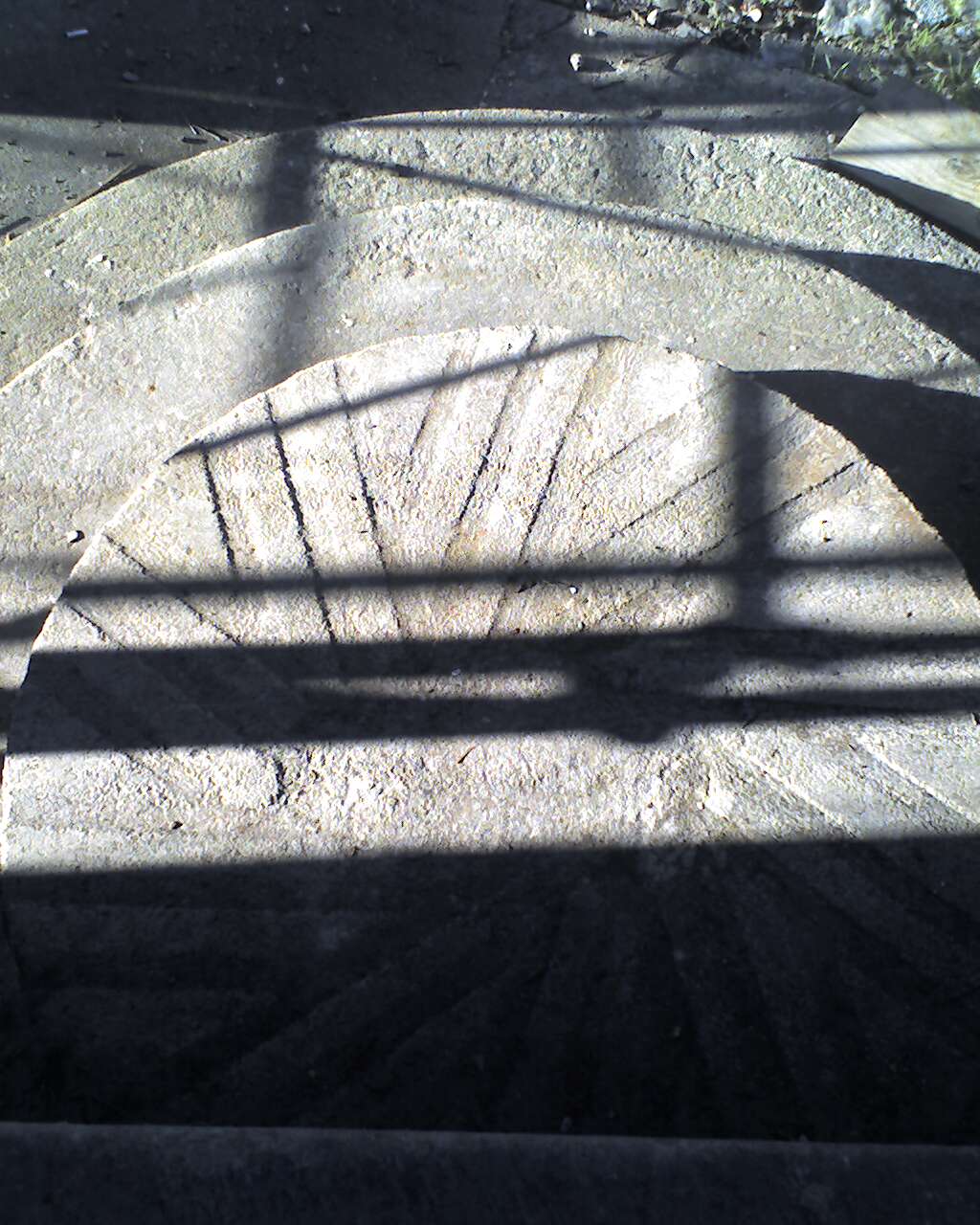
I'm not the biggest fan of round steps, but this entryway into the mill is interesting since an old millstone was incorporated as the top step.  I'm sure some element of this fixture will be saved in the final, but I doubt it will stand as a main doorway into the building.

It was interesting to walk through the place - ghostly images from the sharp angled light of unglazed windows, dust clouds coming up with the passage of all us tourists, and most impressively, views of machinery for a production system from the industrial age - set us up for an adventure of the imagination...not only of what kind of living spaces this building will include, but of the lifestyle, noise and constant danger of all these machines at work with people crowded into the space too closely.


As I understand it, while we did not go down into the substructure, there is an old canal under the building that probably was used to bring water into the production facilities - the river is quite nearby, probably less than 500 feet away.  There are also old tunnels and culverts that we used with conveying systems to the railroad tracks.  There are right-of-ways for CSX and Norfolk Southern that run along the river next to the mill, and an old siding next to the mill that probably served to load out finished goods.

A set of silos is also nearby, on the side of the mill opposite the tracks, you can see it in the photo of the siding.  It doesn't seem an optimal layout, but since it is further uphill, it may have been placed there for flood plain purposes.  These are planned for a future renovation, when they will be repurposed into apartments also.  We saw some preliminary plans for this development - some of the spaces have the potential to be quite grand, with 18 foot diameter rooms and sweeping views of the river. 

A final note on the silos, this inventory/schedule board is still standing in the old mill.  There are still production notes on it - maybe 50 years later, since the mill ceased operation!

Here is a view of the penthouse space at the top of the mill building.  My sense of it is this will be a great apartment someday.
The last photo I will share from the mill is this one of the "man lift" - this is a single person elevator!  It runs on a conveyor belt system.  There was a little platform to stand on, with handholds above the head to cling to...you had to be trained to use it, and I imagine that there were a few injuries associated with its use over the years.  The warning sign here isn't something you can just blow off either.  I think I would have to use the stairs, myself.
I have one last Lynchburg post that I'm saving for tomorrow, then we will get back to Page County and Hawksbill Cabin material.


Tuesday, November 9, 2010

Lynchburg - Town Views


On Sunday morning, I had about an hour’s worth of time on my hands so I decided to take a walk around the town of Lynchburg. It’s a pretty place, set on a series of cascading bluffs that roll right down to the James River. The river itself is the key to the city’s success – the place is named for John Lynch, who ran the first ferry across the river here.


A Wikipedia article at http://en.wikipedia.org/wiki/Lynchburg,_Virginia  includes all the facts you’d want to know about the place - it's had quite a history as a center of commerce and industry. There is a lot to tell, besides the fact that this is the home of Liberty University and “Jerry Falwell World.“ In fact, that association alone was enough to keep me from ever wanting to come here, even though I’ve driven through on US 29 a few times and thought the place was beautiful.


So on my walk, I was giving the town a chance to grow on me, in a way. I liked what I saw, and what I was hearing about the downtown community and their initiatives to make the city a great place to live. There is no choice but to have something of a symbiotic relationship with the big school in the suburbs, but for the most part, that community seems to keep to itself. There are quite a few other great colleges and universities that call themselves home here, too – and those communities are often part of downtown events and commerce.

Among the photos I collected, there is a shot of the Allied Arts building downtown, an art deco tower built in 1931; an interesting elevator that was designed as a solution to getting down the bluffs from the upper town to downtown (there are staircases all over the place); the farmers’ market; and a view down to the river, where the fountain here is set on one of the piers of an old bridge. The fountain draws your eye to the river, parks, and other cultural attractions located in that part of town.

With just an hour, I didn’t have time to get into any of the historic neighborhoods – Lynchburg was a prosperous town in the mid-1800’s but escaped burning during the Civil War – there are several neighborhoods of historic homes that have been restored and are well-kept. Mary’s told me she’d be interested in a return visit to check the place out sometime…I guess I’m up for that too.

Lynchburg - The Hotel Renovation Story, Continued


In the post yesterday, I mentioned some historic aspects of the Craddock-Terry hotel that make for an excellent story, and that's a big part of what makes it a success when it comes to being a well-liked boutique hotel.  I'll start today's post with another view of the main building, which was renovated after sitting empty for more than 20 years - this is the building that was the Craddock-Terry shoe factory.

The hotel complex includes a second building, which housed a tobacco warehouse owned by the King company.  This building was renovated to include hotel rooms, meeting spaces (on Saturday, there was a wedding, then our group used the spaces for seminar sessions on Sunday), a fine dining restaurant, and a pizza/brew pub.  It is connected to the main building by a plaza and the accessible bridge walkway shown in the picture above.

The brew pub was hopping the whole time we were visiting, and the restaurant had a full seating on Saturday night.  The hotel was fully booked also, in part because of the wedding and also because of the 10+ rooms our group had taken.  So it's safe to say this was a successful project.

We learned about the value of the good story, and the community partnerships - these were two themes of the visit, in fact.  One point of interest is the red shoe motif in the signage that decorates the exterior of the hotel.  It turns out that the red shoe has a story of its own within the larger history of the Craddock-Terry company.


Sometime in the mid '70's, the fashion advertisements for one of the shoe brands started featuring red shoes on the models.  These three prints, that decorate the hallways of the tobacco warehouse building, were made from the old ads.  The originals, it turns out, were found in one of the investor's attics.  That persons mother had been a graphic artist involved in developing the original illustrations, and the artwork was stored with some other old keepsakes.  The hotel renovation became a cause to bring them back to light, and here they have made there way to being a feature of the place.

One final note on the story that weaves its way throughout this hotel experience.  Each room's door features a piece of artwork modeled on one of the shoes that might have been manufactured at the old factory.  I've featured room 403 - to my knowledge, none of the people traveling with us stayed here.  But the odd-numbered rooms are the king rooms, that much I do know. 

There are still some expansion plans to note - a new building with more hotel rooms is planned for the area the first photograph was taken from.  It will connect to the main building with an accessible bridge as well.  A rocky bluff - one of Lynchburg's motifs - runs through the block, in fact the main building sits atop it.  They want to put in a water feature here to complete the complex.

I still have some additional posts to make about Lynchburg, and those will be coming along for the next couple of days.

Monday, November 8, 2010

Lynchburg - More on the Craddock-Terry

Bear with me.  I have a couple of posts still to come about the visit to Lynchburg over the weekend.  This morning, a few more interior shots of the main hotel building...this afternoon, a little post about the adjoining building, which houses some restaurants and meeting spaces, as well as additional hotel rooms. 

Tomorrow, I will post some photos of the downtown area, and Wednesday, photos of a new renovation/repurposing of an industrial building that is underway near the hotel.  We'll get back to my beloved Page County topics shortly!

This concept of reuse, repurposing, renovating historic buildings is very exciting.  The students we were traveling with called the Craddock-Terry hotel a "dream project" - the "project of a lifetime" - and it is hard to underestimate how rewarding it might be to get involved in something like this.  And for the developer, who is related to the Craddocks, the family who the shoe company was named for (I found this link but haven't explored it yet:  http://www.vahistorical.org/publications/historycorner_craddock.htm.), the project had to be even more exciting.

(Full disclosure, the involvement of the name Craddock made this visit special for me, too - it's my mother's and aunt's maiden name.)

So touring the building, checking out the wonderful timber framing and considering the fact that they could still be structurally sound nearly 100 years later was fascinating.  They've put together a wonderful boutique lodging experience, all shoe-themed, given the heritage of the main building as an old shoe factory.

Here are interior views of some of the large beams in the lobby area - the factory was closed for 20 years or more before the renovation project began, and the steel plating here is either a reinforcement or a patch that had to be made due to termite damage.  In the reinforcements, there is not joint visible in the members, while the patches involved salvaging excess beams (the loads on the frame are much less with a hotel than with a factory use) and replacing severly damaged areas with them.

Also, two views of interior hallways, one below grade, showing the stone foundation walls, and the second, a higher floor, where the timber columns are visible.  I did not take any photos inside the rooms, but they were very nice, large, and nothing like the cookie-cutter experience you have in the larger chains.  I'll leave you to the website to explore those, if you like.

Next post will include a photo of the King Tobacco Warehouse that was restored next door, and some photos of art work on the interior hallways. 


Sunday, November 7, 2010

Field Trip to Lynchburg


We're on a field trip with Mary's U of Md group (she teaches in the historic preservation department, for those who don't know) to Lynchburg, meeting a developer who's working in the downtown historic district.

One of the projects is the hotel we are staying at, the Craddock-Terry, which used to be a shoe factory (among the recognizable brands:  Buster Brown shoes).  I have a few photos of the hotel interiors to share in some follow-up posts and hope to get a walk in down by the river in a bit.

Meanwhile, here is the front of the hotel, a view of the lobby (with the students checking in), and a detail shot of one of the column-beam connections in the lobby.  The hotel was not in use for 20 years ago, so a lot of work had to be done during renovations, included termite patches to the beams.  I may post some photos of that later.

Here's a link to the hotel...watch out for the elevator music.
http://www.craddockterryhotel.com/index.cfm